Signal Zen
A zen memory game where sound IS the puzzle
"They spoke first. In five notes. How do you respond?"
The Concept
Honestly I'm just really proud of how this one turned out. The space theme, the little aliens drifting around, the UFO that plays the sequence — it all just works together. Even the ad placement feels subtle and natural rather than intrusive.
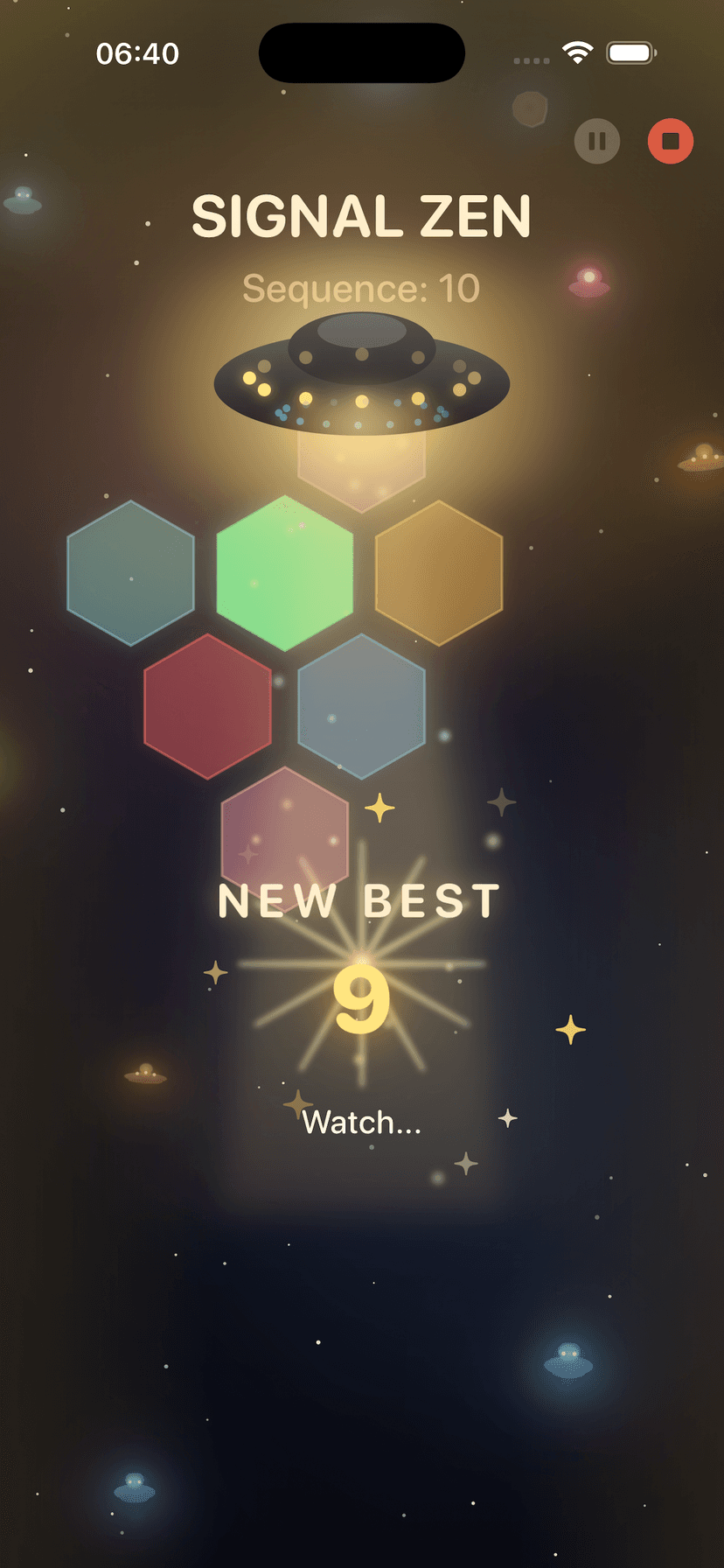
The concept draws from Close Encounters of the Third Kind — that iconic moment where communication happens through music, not words. In Signal Zen, you're learning to speak alien by memorising and repeating musical sequences. Each hexagon combines colour, sound, and haptic response into a single sensory moment.
Sound as the Puzzle
This is what makes Signal different from every other memory game.
Most memory games treat sound as decoration — a little beep when you tap. In Signal, sound IS the entire puzzle. You're memorising musical sequences, not just visual patterns.
The sequences are synthesised programmatically using AVAudioEngine — no audio files, just real-time synthesis. Each hexagon has its own tone, and the sequences you memorise are genuinely musical. You're learning to play back melodies, not just tap colours in order.
This was a deliberate test of the audio system as a platform capability.
The Space Aesthetic
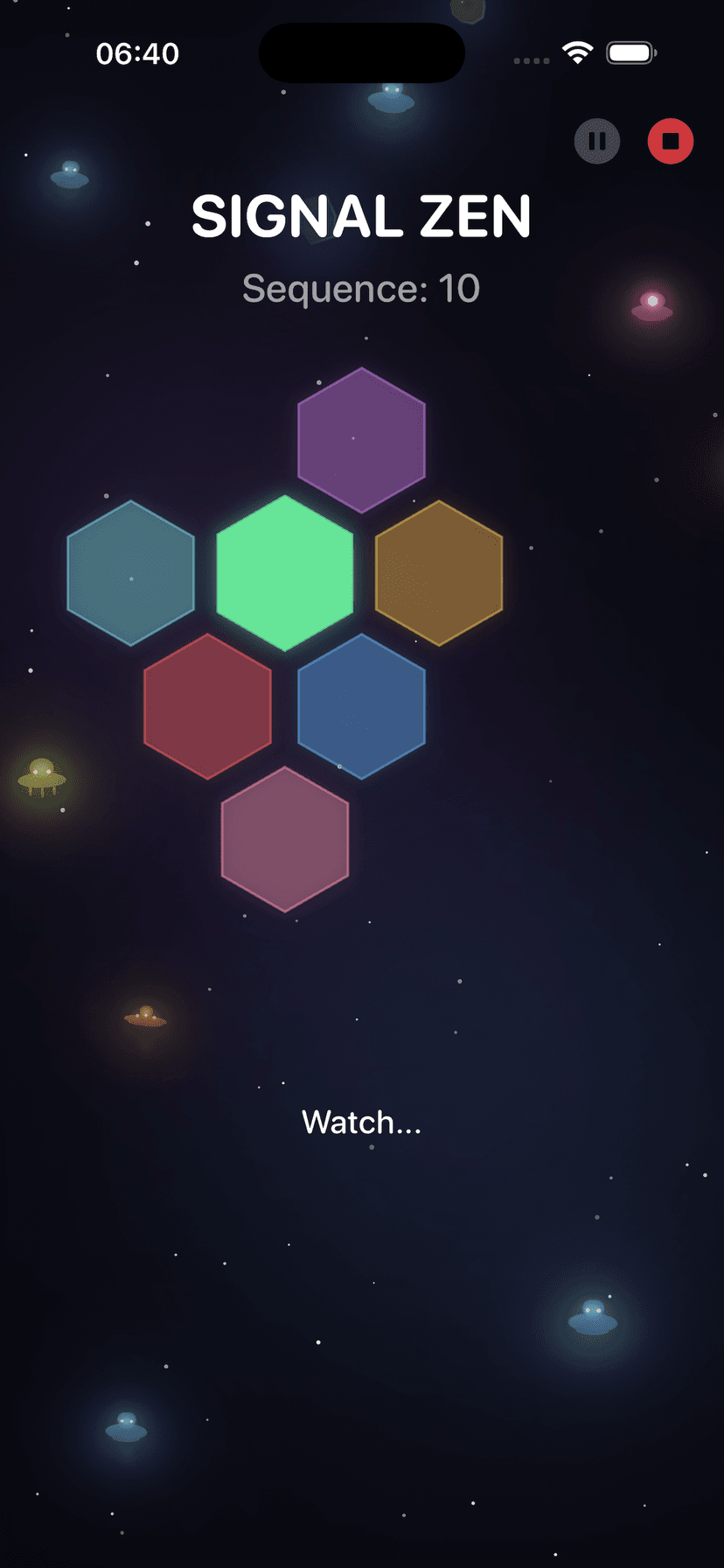
The visual design creates contrast between warmth and coldness:
Warm Hexagons
Seven-tile honeycomb pattern glows with warm amber tones when active
Cold Starfield
Dark, distant background creates atmospheric contrast
UFO Focal Point
The UFO plays the sequences, giving the game a narrative centre
Drifting Aliens
Little characters float around the edges, adding life without distraction
The bright blue pulse on the active hexagon draws your eye immediately — crucial in a memory game where you need to track which tile lit up without hunting for it.
Difficulty & Zen Philosophy
There's easy, medium and hard if you want a challenge, but honestly I found myself just zoning out on easy for a while. I guess that's the whole point!
The zen philosophy runs through the entire portfolio:
- Easy mode is for flow state, not failure
- Harder modes exist for those who want challenge
- No punishment for wrong answers — just try again
- The goal is relaxation, not stress
Technical Highlights
Audio Engine
AVAudioEngine for programmatic sound synthesis
Zero Audio Files
All sounds synthesised in real-time
Haptics
CoreHaptics integration for tactile feedback
Visual Polish
Particle effects, glow animations
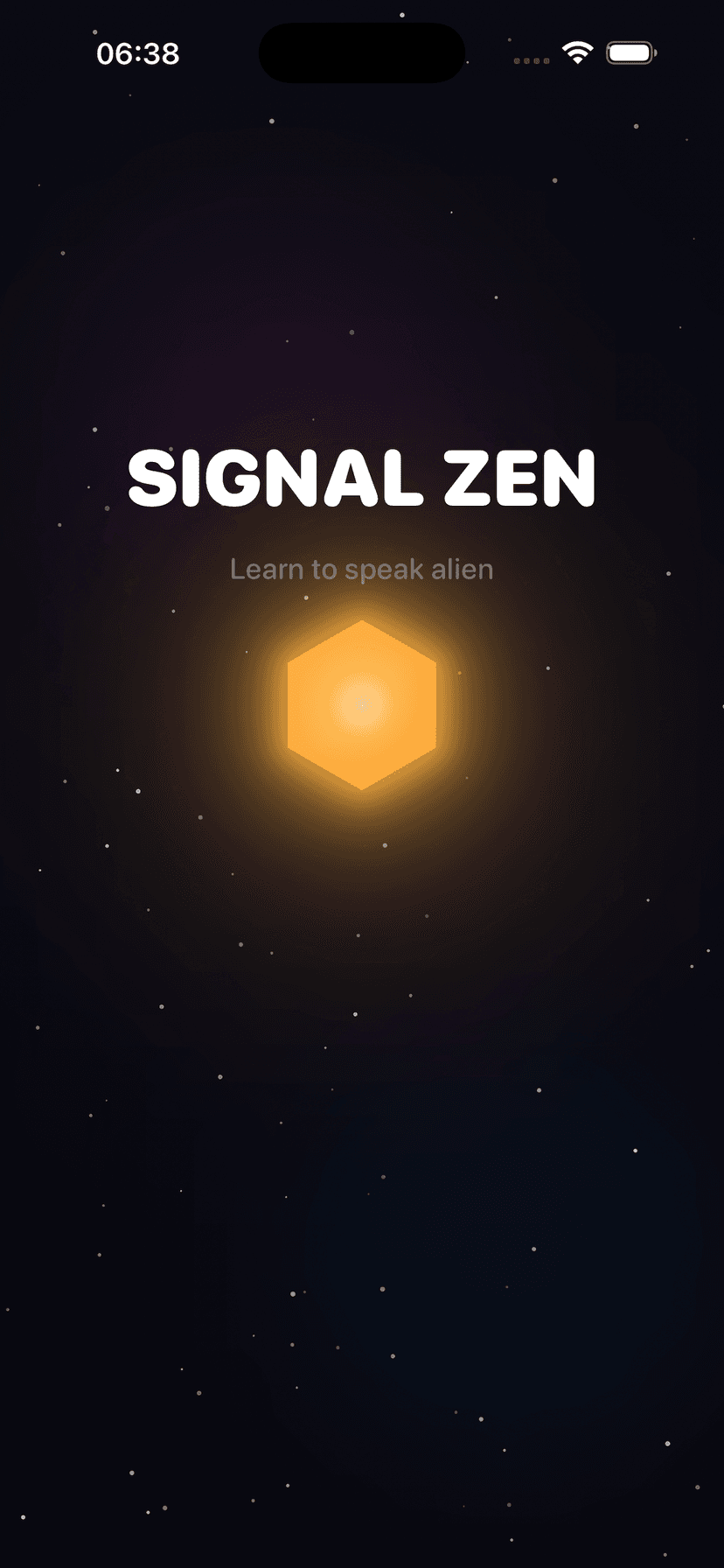
Opening Animation
The splash screen sets the tone immediately with cinematic polish that rivals games with 10x the budget.
A glowing hexagon centerpiece floats in space with "Learn to speak alien" as your invitation. Particle effects drift across a starfield while small alien characters animate around the edges. The whole sequence feels like the opening to a film.
This wasn't just aesthetic indulgence — it demonstrates that indie doesn't mean low-quality. Players form their first impression in 3 seconds. This opening earns their attention.
Development Timeline
Development time from concept to App Store submission
App Store review process — approved and live!
"The power of agentic engineering stumbles through App Store review LOL!" — 8 days total from zero to live on the App Store.
Key Learnings
Technical
- •AVAudioEngine mastery: Real-time synthesis with zero audio files — sequences are generated programmatically
- •Sound-as-puzzle innovation: Making audio the core mechanic, not decoration
- •Multi-sensory integration: Combining color, sound, and haptics into single interactions
Design
- •Zen difficulty balance: Easy mode for flow state, hard mode for challenge
- •Non-intrusive monetization: Rewarded ads that feel natural in the game loop
- •Narrative framing: Close Encounters theme gives personality to a memory game
Product
- •Unique positioning: Found a niche with few competitors (musical puzzles, not rhythm games)
- •Platform capability showcase: Systematically demonstrated iOS audio capabilities
- •App Store review process: Clear screenshots and descriptions are critical for approval
Portfolio Context
Each game in this portfolio deliberately tests a different mobile platform capability:
| Game | Capability Tested |
|---|---|
| Shade Shift | Colour perception, HSB theory |
| Minesweeper Zen | Procedural puzzle generation |
| Signal Zen | Audio system, programmatic synthesis |
| Fledgling (next) | Gyroscope, physics, haptics |
This isn't "five puzzle games." It's a systematic demonstration of mobile platform capabilities, each one proving a different technical dimension — built in weeks, not months.
What Makes It Special
Signal is the most visually impressive and the most unique game in the portfolio.
The audio mechanic is genuinely rare — most musical games on mobile are rhythm games trying to be Guitar Hero. Signal isn't competing with those at all. It sits in its own pocket of "musical puzzle" that barely has any competitors.
The Close Encounters narrative gives it personality that most memory games completely lack.
Now live! 🎉
Share Your Feedback
Tried Signal Zen? I'd love to hear what you think. It takes under a minute.
Give FeedbackYour feedback is collected securely via Google Forms.
They spoke first. In five notes. How do you respond? 👽