The Game
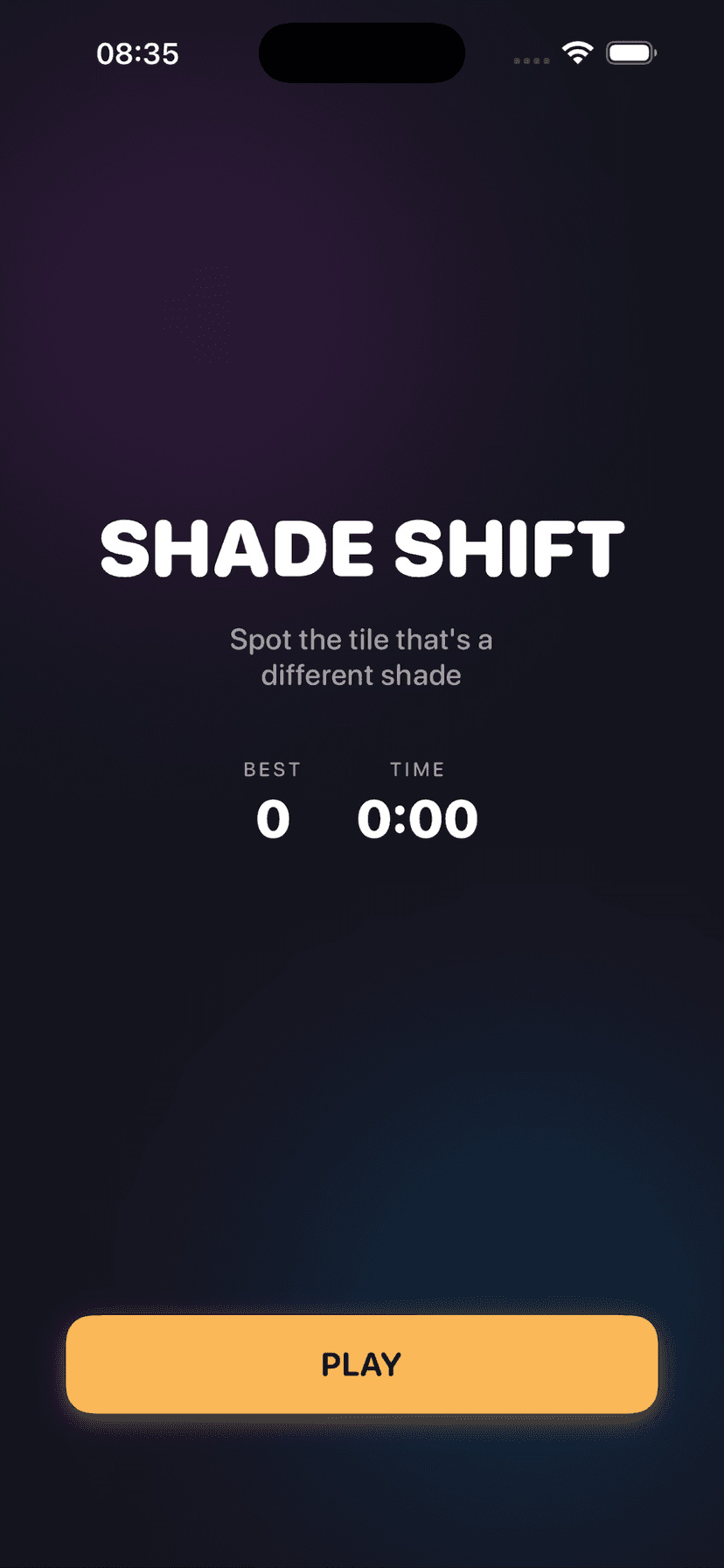
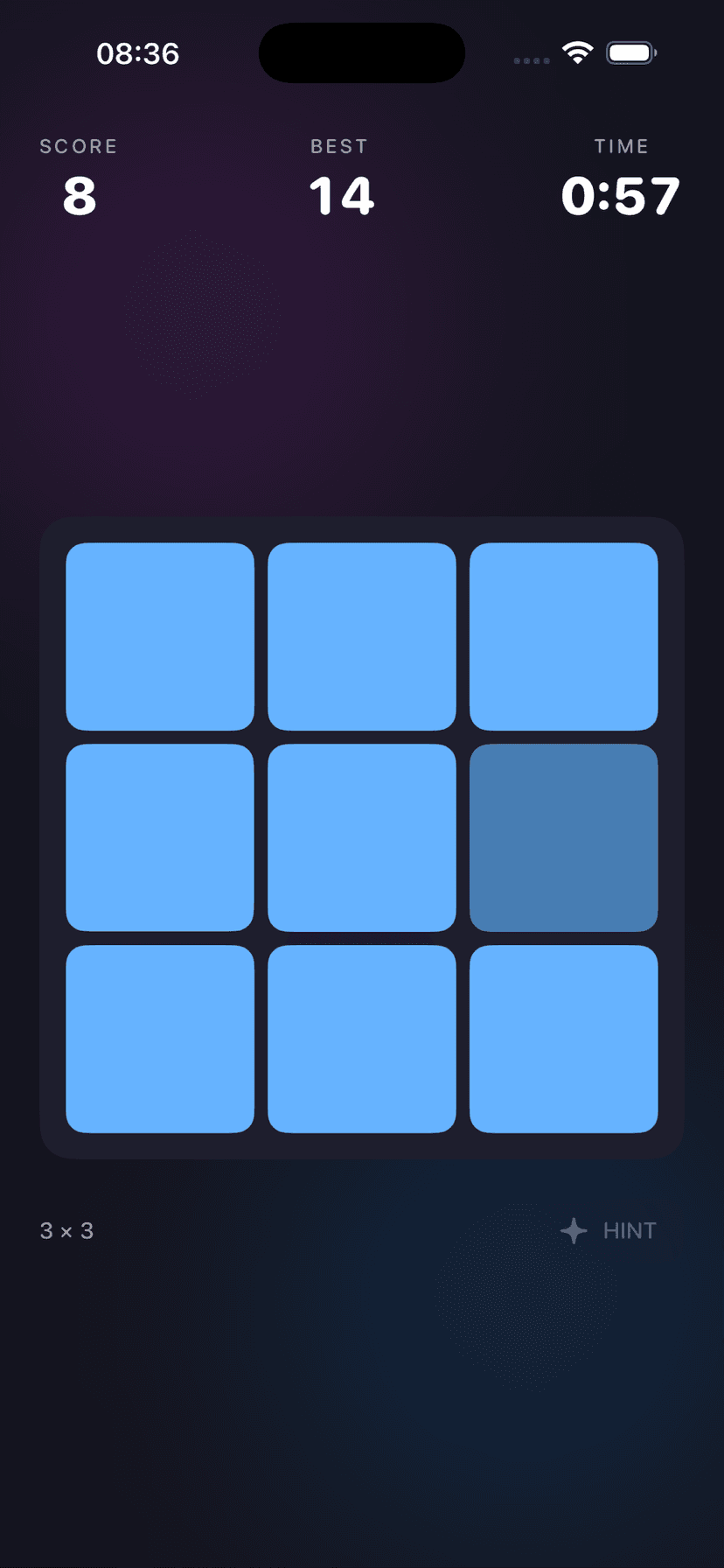
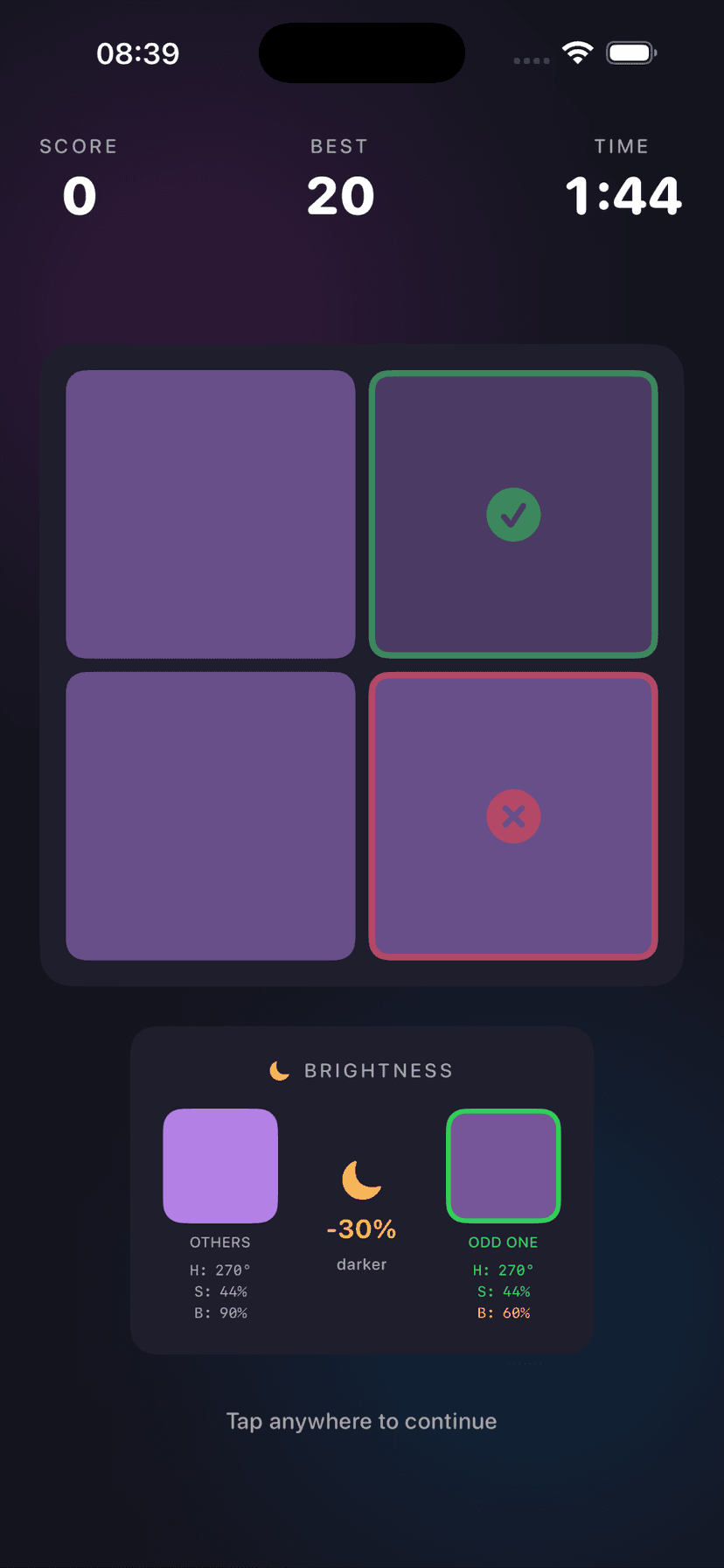
Spot the tile that's a slightly different shade. Grid grows as your score increases, colours get more subtle. No timers, no lives, no stress.
Why colour perception? I researched and ranked classic game mechanics by viral potential vs build complexity. Colour grids won because they're technically low risk - simple grid logic, no physics, no AI, no pathfinding. The point wasn't the game itself. It was proving the end-to-end pipeline.
The Experiment
How fast can you go from zero to App Store submission with modern AI coding tools?
The answer is pretty fast.
But the interesting part isn't the speed. It's the hundreds of little nudges along the way - Xcode build settings, simulator quirks, target configurations, TestFlight setup, App Store Connect checkboxes. Each one would have been a miserable Stack Overflow rabbit hole asking newbie questions.
What This Proved
This isn't a toy project. It's a native iOS app with:
- Haptic feedback on every tap
- Procedurally generated sound effects
- Particle animations
- AdMob integration for rewarded video ads
- Privacy policy
Key Learnings
Casual Game Psychology
Block Blast made $200M+ annually by taking Tetris and removing everything stressful - no timer, no falling blocks, no pressure. The formula: remove friction, let people feel clever while relaxing.
The counterintuitive bit - they did it with zero in-app purchases. Shade Shift follows the same principle. Want a hint? You can choose to watch an ad. You're never forced. Player agency matters.
App Store Connect is a Maze
Screenshots for multiple device sizes, privacy questionnaires, AdMob data declarations, export compliance, age ratings... so many checkboxes. The privacy section alone was challenging to get right - declaring which data types to track for ad tracking required careful navigation.
The Real Value: Shortening the Loop
Describe what's wrong, get a fix, test, repeat. Screenshot an Xcode error or log, paste it in, and get working solutions for stuff I hadn't touched in years. This was a pipeline validation project. Now I know exactly how it all fits together for the next one.
Technical Details
Architecture
MVVM with SwiftUI and @Observable
Colour System
HSB shifting (hue, saturation, brightness)
Audio
Programmatically generated tones
Monetisation
Rewarded video ads via AdMob
Portfolio Context
First game in a series, each testing a different mobile platform capability:
- Shade Shift → Colour perception, HSB theory
- Minesweeper Zen → Procedural puzzle generation
- Signal Zen → Audio system, programmatic synthesis
Not the strongest game — but the strongest pipeline lesson.
Share Your Feedback
Tried Shade Shift? I'd love to hear what you think. It takes under a minute.
Give FeedbackYour feedback is collected securely via Google Forms.