That sounds small. It isn't. Every slam poet knows the moment when you've lost track of the clock, and you can feel the penalty ticking. This app was built from that single, simple concept.
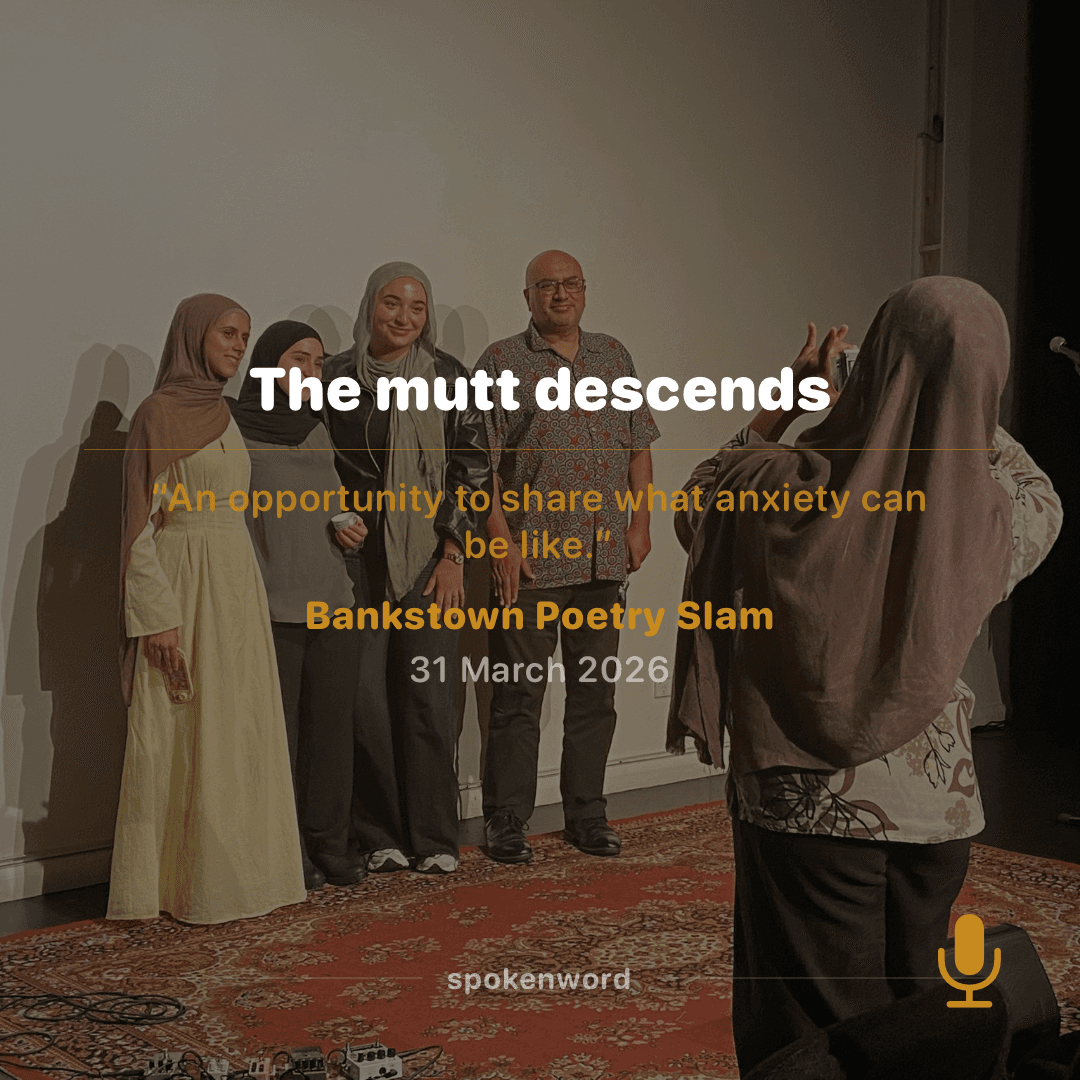
Bankstown Poetry Slam, March 2026.
The Version Problem
The version problem came next. I perform the same poem in different contexts: three minutes for a slam, two minutes for rapid-fire, with stanzas removed or added depending on the emotional arc I want to share that night. Each version needs its own identity, its own rehearsal history, its own notes.
And after a performance, you have maybe five minutes before the memory starts fading. What landed, what didn't, what you changed in the moment without thinking. I needed to capture that before it was gone.
Annotating Performance
I had heard Amanda Gorman talk about how she annotated her poetry to help with performance. I always thought that was a wonderful idea, and it parallels sheet music — which tells a musician where to breathe, where to swell, where to pull back. I wanted that for spoken word.
And when I record a rehearsal, I want to know: did I actually execute those marks, or did I perform a different poem to the one I planned? That question became the annotation system — but that's a story for next time.
Spokenword — Version Branching
Spokenword — Pin your poem
Stage-Ready in One Tap
Just before release, I watched a fellow poet fumble for the right version of a poem they wanted to perform on stage. I thought: wouldn't it be wonderful if you could pin a poem to your home screen and long-press to open it — without ever having to enter the app?
That's what I tried to do throughout: build features I would actually use myself.
“I was never taught rhetoric at school. I still couldn't have named most of the techniques I was using. But like most slam poets, I was using them instinctively every time I performed.”
Learning Rhetoric
The learning aspect is the one I feel most strongly about. I was never taught rhetoric at school. I still couldn't have named most of the techniques I was using. But like most slam poets, I was using them instinctively every time I performed: anaphora, tricolon, volta. The app allows you to review your poems and mark the techniques you're using — so you can see them, name them, and start deploying them deliberately.
Data Analytics for Rehearsal
Writing and performing is one thing. But what about analysing? That got me thinking: could I bring data analytics to rehearsal? I wanted to record runs, play them back, and actually compare them. Not just listen, but understand: where do I rush? Where do I drift?
All of it runs entirely on-device — no data ever leaves your phone. That privacy matters to me, and I think it'll matter to you too.
Poems at Scale
There's also the question of scale. I have poems stored everywhere — Notes, Word documents, files on my Mac. I can imagine most poets have hundreds of poems scattered across years of work. The app handles mass import, de-duplication, organising into folders, and backup — so that those sweet, sweet poems never get lost.
In the Wild
I'll keep iterating on Spokenword. I used it successfully when performing a five-poem feature set at Bread and Butter Poetry Slam last month, as well as competitive slam at Bankstown Poetry Slam — where it helped ensure I kept my poem to under three minutes.
After a set, I journal — how did the audience respond, what landed, what I'd change next time. And if I want to share that moment, I can generate a performance card and send it wherever I like — Instagram, a group chat, a text to a friend who couldn't make it. It's become part of my post-show routine: perform, reflect, share.
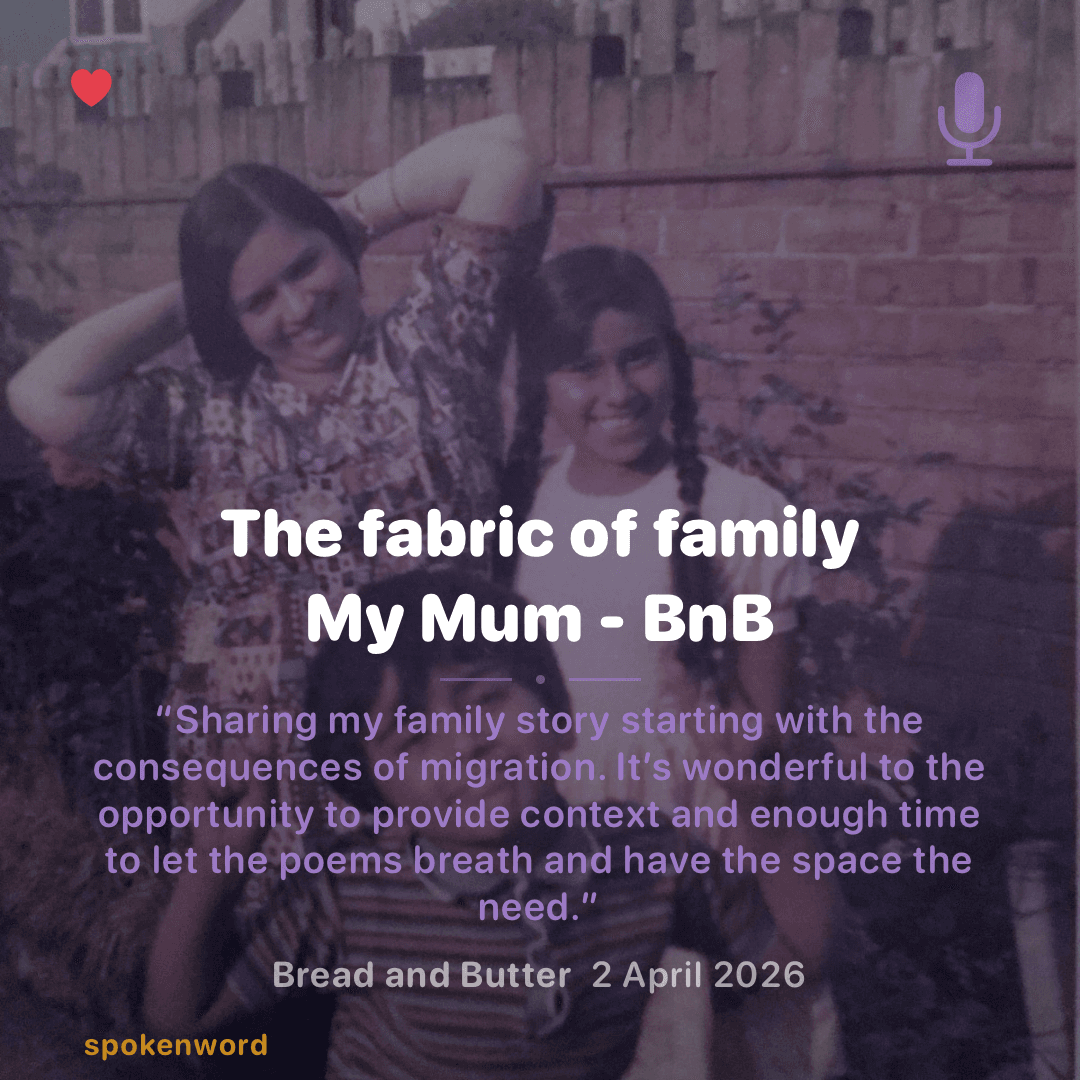
A feature set on family at Bread and Butter Poetry Slam, April 2026.
Spokenword is a vehicle for learning and performing. I hope it supports your journey the way building it has supported mine.