It was the best of resumes; it was the worst of resumes.
Skills-based hiring, AI, and the future of how we express competence
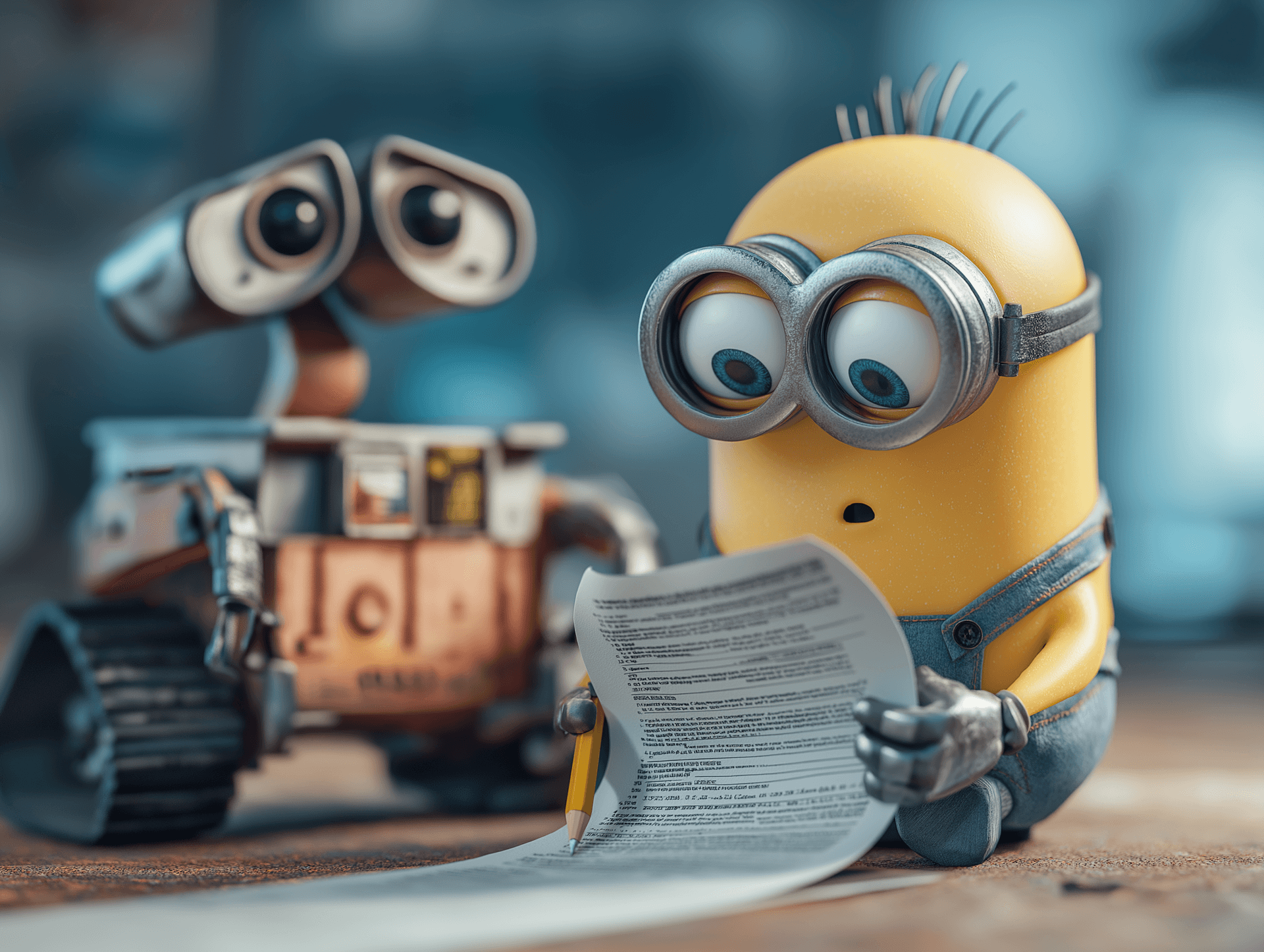
Sorry Charles - you've been appropriated! Dickens was describing the juxtaposition of conditions in London and Paris during the French Revolution. Now perhaps, we're going through a neo-liberal hyper-competitive, skill-based talent economy revolution fuelled by an AI feeding frenzy!
OK... but what will that mean?
This revolution is supposed to shift emphasis toward competence, regardless of where it's learnt. Yet too much focuses on storing verified credentials from established institutions, or microcredentials or short courses, while overlooking self-attested skills and experiences learnt from the school of hard knocks. Life.
We're seeing the beginning of trust and confidence of holder credentials, the increasing issuance of digitally verifiable education and skills-based credentials in digital wallets. Also, with digital portfolios, we're seeing an opportunity to express holistically our narrative around our credentials, our values, considering our experiences and capabilities.
Now we need recruitment departments to do a better job at looking at non-formal and informally learnt competence, through user provided data - credentials that point to personal websites, personal projects or simply self-attestation.
The last mile is broken.
We also have a challenge as the last mile is broken. How does the verifier get a holistic picture of the holder's experience? We live in a paper world - albeit a digital one. Today, we write paper resumes. To make matters worse, we simplify and filter those experiences to fit in two or three pages.
That's OK if you're at the start of a career, but what if you've changed between professions, or you've had a long career - not having the ability to mention these can disadvantage the more experienced. And let's face it that most of our most valuable experiences happen outside the classroom, and a one-week course and certification only signals the potential of competence.
So how do we better express that competence and its potential to be cross-transferrable?
50 skills? Really?
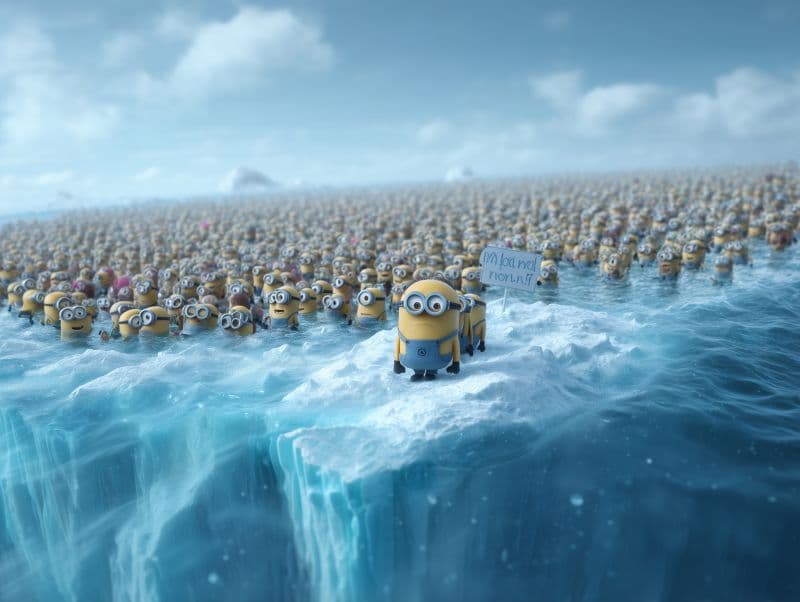
I talked to a LinkedIn executive a couple of years ago bemoaning why their skills list is limited to 50 entries. I think he was slightly incredulous that a techie was asking such a question - as surely 50 would be more than enough for most of us! Congratulations LinkedIn, two years later you've raised that bar to 100! Sadly though, I think that entirely misses the point... and marketing obfuscation can only partially paper over this artificial limitation - it may make it easier for many job board providers, but does not address the holistic skills, passions and experiences of human capability over time. You know, all the things that make us human.
As simple examples, I must have programmed with well over 15 languages professionally. Maybe 10 different Enterprise Architecture tools, then a swag of SDLC tools throughout the SDLC process... What about all the creative tools that Adobe have me pay an arm and a leg for every month that I use Creative Cloud? Don't get me started on Gen AI tool pricing!
Beyond hard technical skills, let's also consider soft skills like critical thinking or problem solving - and maybe that's another 15 if we use some common frameworks that we all have to different levels. We're all expected to have longer careers, that change over time, potentially in different professions. How many will that add?
We can think of describing skills at many levels. Antiquated skills classification systems like O*NET, Australia's own (in development), European, Singaporean and others have their spin, full of gaps and mixed terminologies. Then specific domains have their own taxonomies, and to lose that fidelity would shortchange whole careers. For example, in Australia, the underdeveloped roles women have traditionally played in caring professions are rightly being recognised and extended in OCSA (the new ANZSCO). Without this, it's challenging to demonstrate that there are career pathways and growth available in these professions. Let's hope that the National Skills Taxonomy does a good job in this area.
What about skills learnt in parenting, volunteering or hobbies - transferrable skills that often bring humanity into the equation - are digitally airbrushed out to extinction in today's system. As we represent anaemic versions of ourselves, are we forced to display a simplification of professional identity that misses what makes us all beautiful and human? That we are more than a series of automatons waiting for agentic workflows to take over. What - it's all about MCP now? When did that happen? Poor ACP...
As we look to align credentials, skills, experiences, use self-attestation to differentiate ourselves, we need more control - not less - on what and how we represent ourselves. Removing the hard limit would be a small but useful step in the right direction.
Hello HAL.
Unless you're asleep, it's near impossible to miss AI's ascendency and how it's used at nearly every step of lifelong learning and career journey.
AI is often used to generate resumes - from honest good old tweaking to more malicious hallucinations of entire careers! AI is also often embedded in recruitment ATS systems to filter in the most opaque way possible, to elevate or destroy the dreams and aspirations of many job candidates.
So if the future is that we itemise all our experiences in skills wallets, that we can share with others, to a level that we consent to... why don't we just start writing paper resumes with that fuller detail and let the AIs do what they are already doing - summarise and dehumanise a life well led.
And for those that say as recruiters or employers, we need the human voice to come through? Well, you could always ask for a revamped cover letter to accompany it. Or better yet, go old school and speak to the candidate!
Why self-attestation matters in an AI-filtered world.
A thoughtful comment on the first version of this article raised a critical question: Why adapt humans to AI rather than the reverse? And should digital credentials truly attempt to capture nuanced human experiences?
They cut to the heart of our current paradox. While traditional resumes constrain us to 2-3 pages, AI recruitment systems are already summarising these limited snapshots of our professional lives - shortchanging those with more experience who have worked in a number of professions with a wealth of transferable skills. Meanwhile, fragmented digital credential systems are evolving toward becoming lifetime records but often lack human-centredness.
This is about agency in how we represent ourselves professionally and to our communities in an increasingly turbulent, hyper-competitive world.
The fragmented digital credential landscape.
Digital credentials are trust makers - digital verification tools that use proofs to ensure that what the issuer said about you is verifiable. That's their primary purpose.
What I'm suggesting is that we're seeing various digital tools appearing in the skills economy - digital portfolios, credential platforms, wallets - but they're fragmented and not fully user-centred.
These systems are evolving toward becoming comprehensive records of our education and career experiences across a lifetime - effectively, the future of resumes.
If we look at the standards behind them, W3C Verifiable Credentials 2.0 for example and Open Badges 3.0, we see the standards support evidence, self-asserted claims which are not issued by an issuing authority (e.g., a university), and endorsement. Selective disclosure and zero-knowledge proofs give us the agency to share what we want to share. So, we can see a move towards supporting richer data sets and offering a more nuanced view of a learner.
A modest proposal for the transitional period.
My contention is simple: during this transitional period, why not recognise that AI-driven recruitment systems can already handle fuller professional narratives? This isn't about forcing everyone to create lengthy resumes, but about having the freedom to be our full professional selves if we choose to.
The key question is about agency and choice - shouldn't we have the freedom to decide how comprehensively we stand for our professional lives, to share our voices in a way that matters to us, rather than being constrained by outdated page limits created for human readers in a pre-digital era?
The equity question.
A skills-based system and AI have the potential of levelling the playing field and opening otherwise firmly closed doors for the more disadvantaged in society. At one level maybe it could provide greater equity by enabling skills to rise in prominence? Imagine the resilience you must have if you were the translator for your immigrant parents while still at high school?
On another level it may exacerbate discrimination - the cost of taking courses will put off many joining the new skills-based economy. Another concern is not recognising the skills and competence people from overseas. I once witnessed a distinguished dentist from overseas with decades of experience and expertise, breakdown as he had been rendered invisible, his worth unseen by protectionist professions in Australia. But maybe that's partially a different issue...
For the digitally unsavvy, won't they simply lose out in this new economy? Sadly, this seems inevitable, unless we provide greater focus and attention to ensure equity. Will AI simply continue with unwitting biases that are only far, far too common?
Our futurescapes.
But what really makes me excited is what we can start doing if we have good data, agency - we the people, are in control - and privacy consent mechanisms. What possibilities open up?
With comprehensive professional records, consent-based sharing, and self-attestation baked in, AI could be more than the gatekeeper that it is today. It could help identify not just job matches but potential education and career pathways that might otherwise remain invisible.
The question isn't whether we should adapt to AI or AI should adapt to us - it's how we design systems that recognise human potential in all its complexity. That leaves no one behind.
But what should I do?
No revolution comes without pain. AI is here to stay, and we need systems that express not just qualifications, but the full spectrum of skills and competence earned through experience. We need systems that support easier data entry and we need systems willing to read them at scale. We need systems that allow users to take advantage of that data, provide insight and not simply be a cog in someone else's wheel.
We write our resumes traditionally to a few pages, ignoring our extensive experiences and skills. Future systems will encapsulate fuller histories, so why not start writing longer, more comprehensive resumes now and let AI summarise from complete data?
After all, let's be honest, they're doing that anyway - but currently with incomplete information. And with that, we're all simply short-changing ourselves.
And in doing so, we might finally move beyond "the best of resumes, the worst of resumes" to something that truly embodies the human experience.
Editor: No LinkedIn Executive had their feelings hurt in the making of this post.
This post is based on the following LinkedIn posts:
Vinod Ralh
Enterprise & Solution Architecture | AI Strategy | Agentic Engineering